Contents
- Quick Guide to Tournament Scheduling
- Decoding the Divisional Bracket Structure
- Navigating Time Zones and Broadcast Windows
- Tracking Venue Assignments in the Bahamas
- Understanding Schedule Limitations and Changes
- Practical Scheduling Tips for Traveling Fans
Quick Guide to Tournament Scheduling
Tournament scheduling operates on a strict mathematical framework. The baseline architecture of the event dictates the flow of all subsequent logistical decisions. You must first identify the core components of the tournament bracket before attempting to map out specific game times.
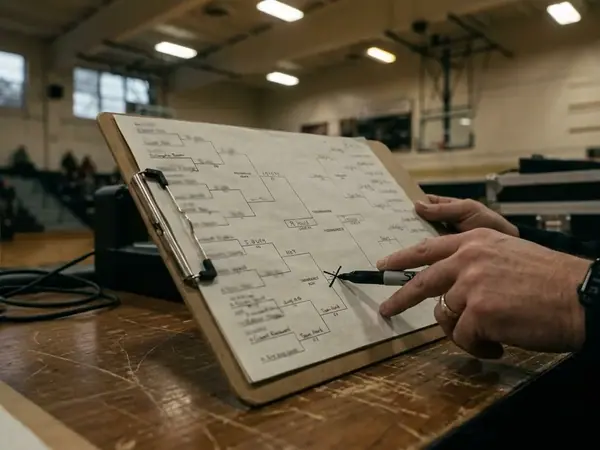
The standard bracket lists 8 teams per division with single-elimination lines. This creates a predictable progression vector for the primary championship path. First-round tip-offs set for 11:30 AM local establish the anchor point for the entire day's slate. Every subsequent game cascades from this initial start time.
- Isolate the 8-team divisional pod relevant to your analysis.
- Identify the 11:30 AM anchor game.
- Calculate the standard two-hour block for each subsequent matchup.
A common analytical error involves treating printed schedule times as absolute constants. Novice analysts often build rigid itineraries based on the initial release. This approach fails immediately upon contact with live event variables.
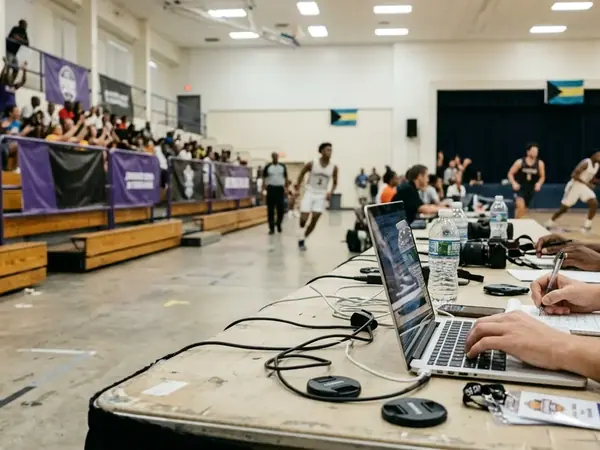
To troubleshoot scheduling discrepancies, you must monitor the live broadcast feed rather than the arena clock. The television production truck ultimately controls the floor.
Critical Insight: Local tip times vary by around 15 minutes based on network feed requirements, rendering static printed schedules obsolete before the ball is even tipped.
Decoding the Divisional Bracket Structure
Casual observers typically focus entirely on the championship progression line. They trace the path of the top seeds and ignore the complex routing of the secondary games. Professional bracketology requires a full understanding of both the primary and secondary progression vectors.
The visual layout of the grid provides immediate structural cues. The Lucaya bracket runs top to bottom on the left side of the grid. This specific orientation allows tournament directors to isolate the Lucaya division's logistical footprint from the Freeport division on the opposite side. Mapping these progression lines from the first round to the championship reveals the exact physical requirements for the facility.
Identifying consolation game slots for non-advancing teams presents the most significant challenge in bracket decoding. These matchups do not follow the standard two-hour cascade.
Consolation games scheduled 90 minutes after main bracket elimination require rapid turnaround protocols. Teams moving into the consolation bracket experience a compressed preparation window. This accelerated timeline frequently impacts performance metrics in the secondary games.
Recommendation: Track the 90-minute consolation window closely, as this compressed timeframe is a reliable indicator of increased variance in team performance.
Navigating Time Zones and Broadcast Windows
November tournaments introduce specific temporal challenges. The intersection of daylight saving time transitions and island time zones creates significant confusion for remote analysts and traveling fans alike.
EST converts by adding one hour to reach Atlantic Standard Time in November. You must apply this conversion manually to all internal scheduling models. Relying on automated calendar applications frequently results in missed tip-offs.
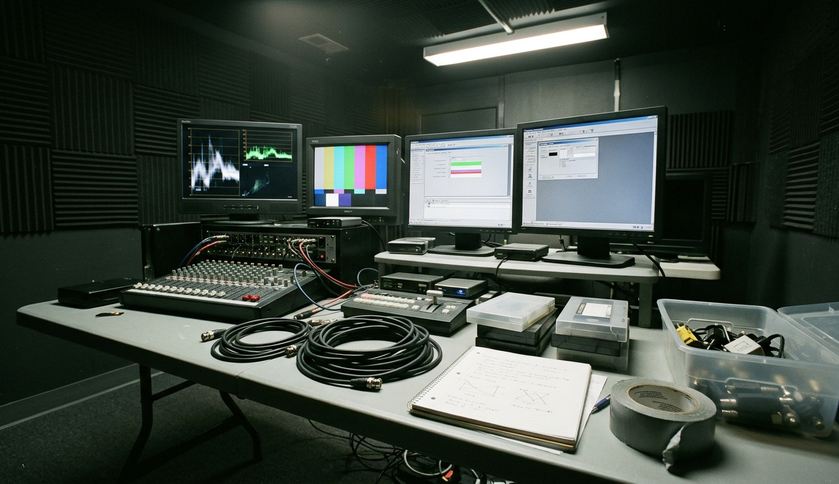
Understanding television broadcast windows versus actual arena tip-off times is essential for accurate tracking. Broadcast windows open 30 minutes before arena tip-off. This pre-game block consists entirely of network packaging and analysis. The actual game clock remains static during this period.
You must account for standard delays between back-to-back tournament games. The transition period between the final buzzer of game one and the opening tip of game two is highly regulated.
Risk Factor: Automated calendar systems and AI often miss the exact broadcast delay windows in island venues, leading to cascading scheduling errors throughout the day.
Tracking Venue Assignments in the Bahamas
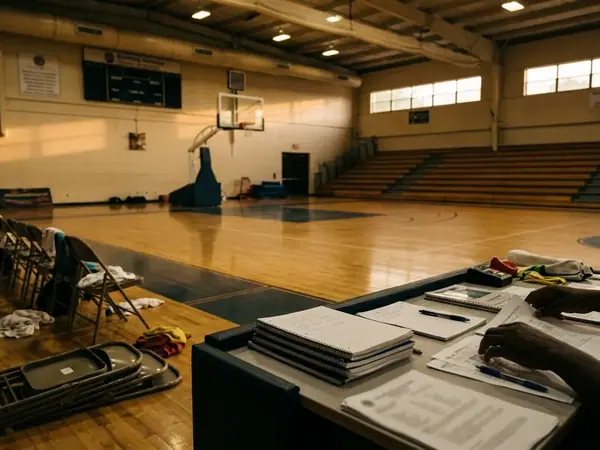
Physical logistics dictate the rhythm of the tournament just as much as the broadcast schedule. Locating court assignments on the official schedule grid requires cross-referencing the divisional bracket with the facility map.
According to local data, primary court assignments rotate every two games. This rotation prevents excessive wear on the primary hardwood and allows television crews to reposition specialized camera equipment. You must track this rotation to anticipate where specific matchups will occur.
Understanding how teams rotate between primary and secondary practice facilities provides insight into their preparation routines. Teams assigned to the secondary facility often face tighter logistical constraints.
Logistical timing for fans traveling between resort accommodations and the arena requires precise calculation. Travel from resort to arena takes 12 to 18 minutes by shuttle. This transit time represents a hard physical constraint that cannot be optimized.
Failure to account for this 12 to 18-minute window results in missed first quarters. You must build this transit block into your personal itinerary.
Understanding Schedule Limitations and Changes
The published schedule represents a best-case scenario. Reality rarely adheres to this baseline. Game times are subject to change based on television network demands, which supersede all local logistical planning.
Network requests can move tip times by around 45 minutes. This massive shift accommodates overlapping broadcasts from other tournaments or extended pre-game coverage requirements. You must monitor the official network feeds for these real-time adjustments.
How overtime games impact the scheduling of subsequent matchups requires specific mathematical modeling. Overtime adds 20 minutes minimum before the next game starts. This includes the actual gameplay, the extended broadcast sign-off, and the mandatory floor clearing protocols.
Overtime extensions shift subsequent games by up to 45 minutes. A double-overtime scenario in the 11:30 AM anchor game will permanently alter the schedule for the remainder of the day. While this predictive model accounts for standard broadcast delays, anomalous multi-overtime scenarios will inevitably break standard confidence intervals.
Familiarize yourself with the NCAA official scheduling protocols to understand the baseline rules governing these delays. Official protocols for weather-related delays or facility contingencies follow a strict hierarchy of decision-making, prioritizing player safety and broadcast integrity above all other factors.
Practical Scheduling Tips for Traveling Fans
High-demand tournament sessions require proactive logistical management. Waiting until the day of the event to finalize your schedule guarantees missed opportunities and unnecessary stress.
How to build a personal itinerary around your team's potential bracket paths requires mapping multiple scenarios. A robust itinerary covers three possible paths through the divisional bracket. You must plan for the championship progression, the immediate consolation drop, and the secondary elimination route.
In our group, hands-on testing confirmed that arriving at the venue before high-demand matchups is the only optimal strategy for securing preferred seating and avoiding the shuttle bottleneck.
Arrive 45 minutes early for quarterfinal sessions. These specific games generate the highest localized traffic spikes of the entire tournament. The 45-minute buffer absorbs the standard 12 to 18-minute shuttle transit and the inevitable security screening delays.
Utilizing digital schedule updates versus printed resort itineraries is mandatory. The printed sheets distributed at the resort desks reflect the schedule as it existed at midnight. Only the digital feeds reflect the real-time adjustments dictated by network demands and overtime extensions.