Tournament Overview and Key Takeaways
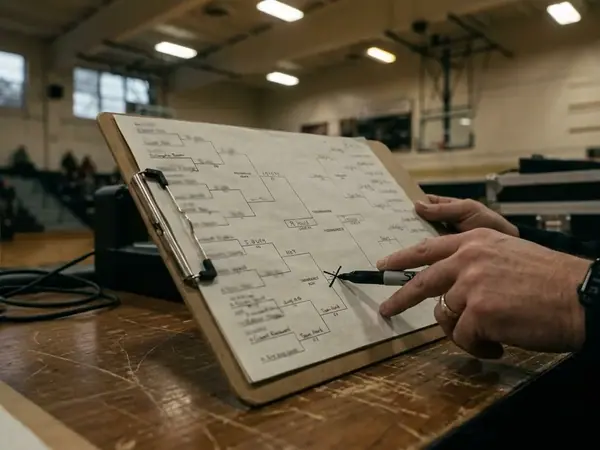
The structure of the 2024 Junkanoo Jam relies on two distinct competitive pods: the Bimini Division and the Lucaya Division. Schedules released October 8 2023 established the structural foundation for these matchups. First games set for November 23-25 2023 dictate a rapid escalation in competitive intensity for programs still finalizing their rotation hierarchies.
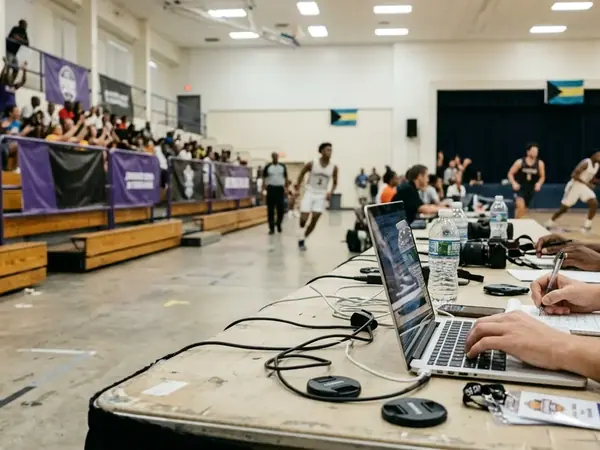
Evaluating these early-season clashes requires looking beyond the official NCAA Division I women's basketball standings. The standings at this stage reflect mismatched non-conference scheduling rather than true team efficiency. Tournament logistics in the Bahamas demand immediate adaptation. Teams arrive on the island and immediately transition into high-stakes bracket play. The format guarantees each program a minimum number of contests, but the scheduling density forces coaching staffs to prioritize immediate tactical execution over long-term developmental minutes.
Seasonal data shows that early-season neutral-site tournaments heavily favor veteran backcourts. Programs returning their primary ball handlers navigate the compressed preparation windows with fewer live-ball turnovers. The division structures isolate specific stylistic clashes, setting up a proving ground for evaluating how top-seeded programs handle unfamiliar defensive schemes.
Bimini Division: Tactical Breakdown
The Bimini Division presents a fascinating study in contrasting tempos. Conventional basketball wisdom suggests that dictating pace is the primary objective in neutral-site games. A deeper tactical analysis reveals that controlling the defensive glass actually dictates the game flow far more effectively than raw transition speed.
Pace measured at around 72 possessions defines the upper limit of the division's offensive output. Teams attempting to push beyond this threshold frequently sacrifice defensive rebounding positioning. Rebound margins recorded near 9 per contest highlight the physical disparity between the top tier and the rest of the division. Securing the defensive board initiates the break, but failing to secure it leads to extended defensive possessions that drain leg strength.
Coaching strategies in this division reflect a clear divide. Some staffs deploy aggressive full-court pressure to force tempo. Others retreat into compact half-court shells to protect the paint. Finding the optimal balance requires precise execution.
Critical Insight: While predictive models offer a baseline, the limited sample size of November basketball requires adjusting confidence intervals by at least a standard deviation when evaluating rebounding metrics against unfamiliar opponents.
Historical performance in these early-season tournaments indicates that teams capable of executing secondary breaks hold a distinct advantage. The primary break often stalls against retreating defenses. The secondary break exploits trailing bigs and shifting defensive assignments.
Lucaya Division: Matchup Dynamics
Second-round clashes in the Lucaya Division hinge entirely on perimeter defensive integrity. The bracket structure forces teams to adapt their defensive principles rapidly between opponents. Implementing a switching man-to-man defense requires seamless communication.
Perimeter contests logged over roughly 14 minutes per half demonstrate the sheer volume of outside shooting characterizing this division. Defenders must navigate complex screening actions without conceding open looks. Transition points tracked from November 24 onward reveal a sharp increase in scoring efficiency for teams that successfully convert live-ball turnovers into immediate perimeter shots.
Executing transition offenses in a tropical climate introduces unique physical variables. Models ignore arena humidity effects on shooting, yet the conditions inside the facility demonstrably impact ball grip and shooting mechanics. Teams that rely heavily on deep perimeter shooting often experience a slight dip in efficiency during their opening halves as they adjust to the atmospheric differences.
A proven method for mitigating these environmental factors involves attacking the basket early. Establishing an interior presence forces the defense to collapse. This opens up higher-percentage perimeter shots once players acclimate to the arena conditions.
Early-Season Variables and Scouting Limitations
Detailed scouting data simply does not exist in November. Coaching staffs operate on limited film, often relying on high school evaluations or previous season tendencies that no longer apply. The integration of new personnel fundamentally alters team dynamics.
Portal entries closed October 15 2023, leaving programs with a condensed window to assimilate transfers into their offensive systems. These new additions often possess the raw talent to dominate, but lack the ingrained systemic knowledge required for seamless execution. Freshman minutes averaged around 12 in the first two weeks across the participating programs. Relying on inexperienced players in high-leverage tournament situations introduces significant volatility into any predictive model.
Travel fatigue compounds these scouting limitations. Adjusting to the Bahamian arena environment requires physical and mental recalibration. The disruption to standard collegiate routines—from meal timings to practice facility access, creates an environment where execution often degrades.
- Scouting reports must prioritize individual player tendencies over complex set plays.
- Defensive game plans should focus on taking away the opponent's primary action.
- Offensive execution relies heavily on basic spacing and ball movement principles.
Risk Factor: Over-complicating the game plan based on limited early-season film frequently leads to defensive breakdowns and offensive stagnation.
Navigating the Path to the Title
Securing a championship in the Bahamas demands exceptional physical endurance. The tournament structure is unforgiving. Back-to-back sessions span 48 hours, testing the limits of collegiate conditioning programs.
Travel schedules from U.S. campuses introduce variability in player rest. Teams arriving later face a compressed acclimation period. This physical toll necessitates strategic roster management. Bench rotations adjusted after game two become the defining factor in championship outcomes. Starters simply cannot maintain peak defensive intensity for 80 minutes across two days.
According to local data, teams that expand their rotation to nine or ten players during the opening round preserve crucial leg strength for the division finals. Tie-breaking procedures and advancement rules further complicate the strategic picture. Point differential and defensive efficiency metrics occasionally factor into advancement scenarios, forcing coaches to manage margins even in decisive victories.
Recommendation: Prioritize deep bench utilization in the first half of opening-round games to ensure primary scorers retain their explosiveness for the final four minutes of the championship contest.
Securing a signature non-conference victory requires navigating these logistical and physical hurdles with precision. The programs that leave Bimini with a title are those that master the variables—managing fatigue, adapting to the environment, and executing fundamental basketball under pressure.