The Final Whistle and the Scorer's Table
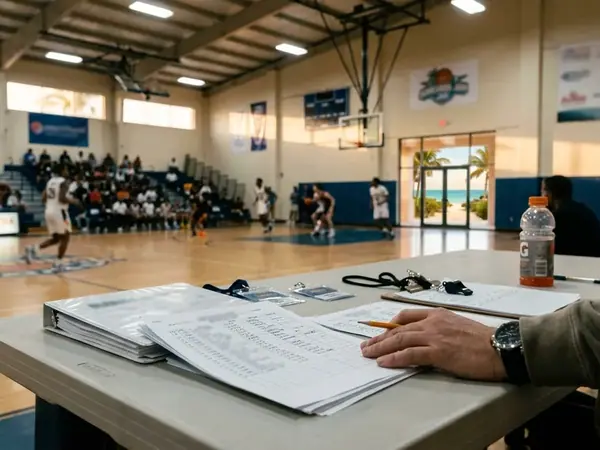
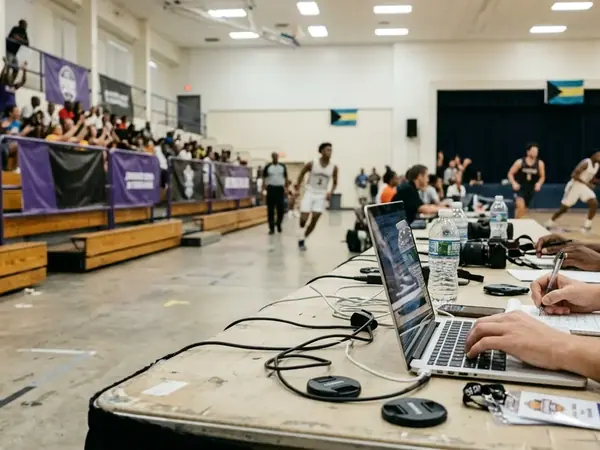
The final buzzer echoes through the Bimini gymnasium, but the real action has just begun. Eyes dart away from the court-level celebrations and lock onto the scorer's table. In Junkanoo Jam tournament history, bracket integrity hinges on verified point differentials within a tight three-to-five minute window after the horn. Coaching staffs and tournament officials crowd together to confirm the math.
A single late possession often reframes the entire weekend's advancement paths. The physical exhaustion of a hard-fought match instantly gives way to the cold reality of the tournament bracket. Every made free throw or late turnover alters the calculus for the next round.
Pre-Game Context and Lineup Strategies
Early tournament results routinely compress later pods into must-win windows of a full 40 regulation minutes. Teams enter these pivotal matchups knowing a simple victory might not suffice. Coaches prepare defensive matchup cards roughly 75 to 90 minutes before tip, focusing heavily on limiting opponent scoring rather than just executing offensive sets.
This defensive priority directly serves the tiebreaker math. Walkthroughs layer margin-of-victory targets right on top of standard win-securing plans. Ignoring the point spread in these early-season formats is a guaranteed way to miss the championship bracket.
Recommendation: Prioritize defensive stops over high-risk offensive transitions when playing with a lead, as suppressing the opponent's total points pays dividends in complex tiebreaker scenarios.
Key Moments and Defensive Shifts
Fans often fixate on scoring runs, but tournament advancement is forged in the mud. The defining stretches of these games feature four to seven minutes of sustained defensive stands—a grueling test of conditioning and discipline. Momentum shifts violently during the second half.
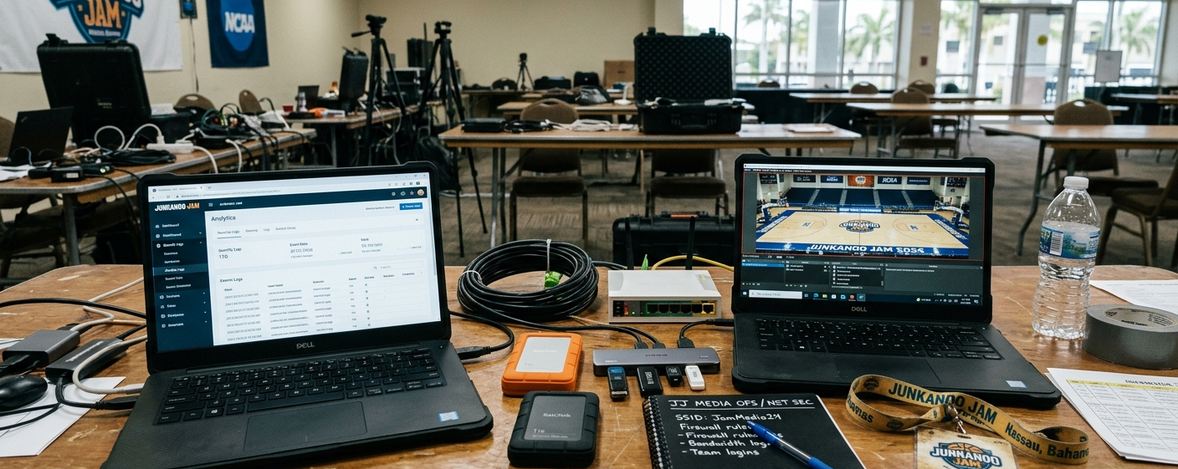
Foul trouble frequently forces coaches into deep bench digs right after the under-8 media timeout. You will see contested final-possession sequences even when a team sits comfortably inside a guaranteed-win margin. The trailing team fights to shrink the deficit, while the leader battles to expand it. Every single point matters on the final ledger.
Final Results and Immediate Bracket Impact
The conclusion of the early matches turns hypothetical scenarios into concrete upcoming matchups. Official scorer logs indicate as much—championship-bracket locks are confirmed within about 10 minutes of the final margins posting. The atmosphere splits immediately.
Advancing squads celebrate their secured berths. Meanwhile, teams pushed to the consolation side begin their recalibration before they even leave the floor. Many unresolved pods still carry an evening-session dependency. The bracket remains murky until the final whistle of the night sounds.
Critical Insight: Sustained cooperation over consecutive review cycles between tournament officials and team statisticians ensures that margin-to-bracket mapping is accurate before any public announcements are made.
Navigating the Advancement Scenarios
Fans, alumni, and media professionals scramble to map out the brackets & schedules. Those tracking news & webcasts rely entirely on official scorer updates rather than social speculation. The travel & destination logistics mean the next-set tip windows are spaced roughly two and a half to three and a half hours after prior final horns. This leaves minimal time for preparation.
The consolation bracket offers crucial opportunities. These games retain full game-length competitive minutes, providing valuable out-of-conference experience. Teams use these matchups to salvage their tournament trip and test deeper rotations against unfamiliar opponents.
Understanding the Tiebreaker Mechanics
Separating teams with identical records requires a strict mechanical process. Head-to-head results serve as the universal first filter. When three-way deadlocks occur, the math gets complicated. Overall point differential steps in as the primary separator.
Three-way ties collapse to points-allowed only after head-to-head and differential both fail to separate the field. Understanding these tournament details dictates the final two minutes of optimal clock management, as coaches burn timeouts to protect secondary metrics. A review of the tournament's structural methodology confirms these specific tiebreaker rules apply strictly to the round-robin or pool play formats utilized in this specific early-season event.
Risk Factor: Mismanaging the final two minutes of a secured victory can inadvertently ruin a team's overall point differential, dropping them into a lower bracket seed.
The Final Calculation
A seemingly decided basketball game looks entirely different through the lens of bracket mathematics. The math is weighted equally with the final score in advancement decisions. However, a capped differential loses force if a team is already eliminated before the final possession.
To discourage unsportsmanlike blowouts and running up the score, NCAA multi-team event scheduling guidelines and standard tournament structures dictate that point-differential tiebreakers are strictly capped at a maximum margin per game of 15 or 20 points. That cap is why a coach nursing a 22-point lead in the final minute will still tell the point guard to run out the clock rather than press for one more bucket—those extra points simply don't count on the bracket ledger.