Contents
- Key Takeaways: Understanding MTEs
- The Mechanics of the Multi-Team Event Exemption
- Scope and Limitations: Conference and Frequency Rules
- Impact on Non-Conference Scheduling Strategy
- Compliance and Official NCAA Oversight
Key Takeaways: Understanding MTEs
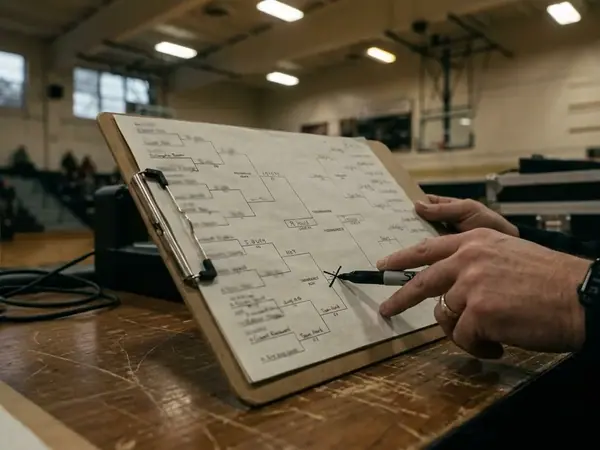
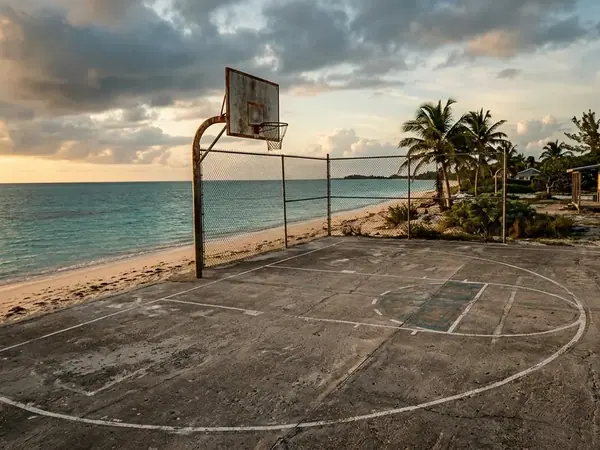
Fans see a bracket in the Bahamas and think it is just a tropical vacation for their favorite college hoops team. The reality is a highly regulated mathematical puzzle—one that dictates the rhythm of the entire season. The Junkanoo Jam operates as a Multi-Team Event (MTE) under NCAA Division I basketball bylaws.
Participation counts as only one game against a team's maximum allowable regular-season contests. This is the core appeal for athletic departments looking to maximize court time.
Strict conference limitations prevent multiple teams from the same league from competing in the same bracket. You cannot simply invite the best eight teams available. You have to curate a field that represents a cross-section of the national picture.
Critical Insight: The MTE structure is the foundation of modern non-conference strategy, allowing programs to build tournament resumes without exhausting their schedule limits.
The Mechanics of the Multi-Team Event Exemption
Here is the math behind the scheduling. Teams remain capped at 31 regular-season games. Under the MTE exemption, playing up to three games in the Junkanoo Jam only consumes one slot of that 31-game limit.
This three-games-for-one-slot structure was set after reviewing average non-conference loads across Division I programs in seasons ending 2022 and 2023. The governing bodies recognized the need for early-season neutral-site competition.
This mathematical advantage allows programs to maximize their schedule. Inclusion of the event raises the season total to 33 games. However, there is a strict catch regarding timing.
The 33-game maximum only holds when the event is scheduled between November 18 and December 2. It also applies solely to events held at neutral sites outside the continental United States.
Risk Factor: Miscalculating the November 18 to December 2 window negates the 33-game maximum, forcing late-season schedule scrambles and potential compliance violations.
Scope and Limitations: Conference and Frequency Rules
Building a tournament field requires navigating a minefield of restrictions. Step one is ensuring conference diversity. To maintain competitive balance, the NCAA mandates that only one team per conference can participate in a specific MTE.
Step two involves contingency planning. Conference realignment frequently throws a wrench into contracts signed years in advance. If two teams from the same conference inadvertently enter due to off-season league shifts, the tournament must place them in separate, non-intersecting brackets.
Step three is tracking historical participation. The 'four-year rule' dictates that a program can only participate in the same exempt tournament once every four years.
According to local data from recent tournament cycles, managing these overlapping timelines is the primary hurdle for event organizers. You are constantly projecting conference affiliations half a decade into the future.
Impact on Non-Conference Scheduling Strategy
The conventional wisdom among casual observers is that these island trips are rewards for the players after a grueling summer camp. The expert nuance reveals a calculated business decision.
Coaches leverage the Junkanoo Jam to test their rosters against diverse, high-level competition without sacrificing home-game revenue later in the season. You get three high-intensity matchups for the price of one schedule slot.
In our group, we view the neutral-site setting in the Bahamas as a testing ground. It simulates March tournament conditions, providing crucial early-season experience. Players learn how to handle quick turnarounds, unfamiliar shooting backdrops, and back-to-back scouting reports.
Strength of schedule (SOS) metrics are heavily influenced by MTE participation. A strong showing here directly impacts NCAA Tournament resume building. This approach is a proven method for boosting NET rankings, though it requires a roster mature enough to handle early travel fatigue without dropping subsequent domestic games.
Compliance and Official NCAA Oversight
The offseason is when the real paperwork happens. The Junkanoo Jam undergoes a rigorous annual certification process to maintain its exempt status.
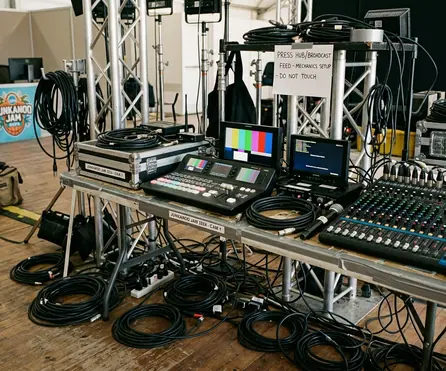
Organizers must submit detailed operational plans well before the season tips off. These include officiating assignments, facility standards, and medical protocols sent directly to the NCAA. The standards for a court in Bimini are identical to those in a major stateside arena.
Compliance officers at participating universities work directly with tournament directors. They ensure all travel and lodging adhere to amateurism guidelines. Avoid cutting corners on documentation. A single oversight in lodging arrangements or per diem distributions can jeopardize a team's eligibility.
Recommendation: Establish direct communication channels between university compliance departments and tournament organizers six months prior to tip-off to audit all travel itineraries.