Hurricane Matthew did not just interrupt the 2016 Junkanoo Jam. It forced the tournament to prove, under pressure, that an NCAA event could move islands, rebuild its operating plan, and still tip off on time.
Contents
- Tournament Relocation: Key Takeaways
- The Devastation of Grand Bahama
- Executing the 30-Day Pivot to Bimini
- Scope and Logistical Limitations
- A New Era for the Junkanoo Jam
Tournament Relocation: Key Takeaways
The short version is clean. Category 4 Hurricane Matthew damaged the original Freeport venue weeks before tip-off, organizers moved the full tournament operation to Bimini in under 30 days, and all eight NCAA Division I women’s teams competed without schedule disruptions.
The field result matters because relocation stories can get too tidy after the fact. On the ground, this was not a ceremonial venue change. It was a compressed rebuild of team movement, lodging, court readiness, media access, and local staffing.
What changed immediately
- The host island changed: Freeport, Grand Bahama could no longer support the event after the storm.
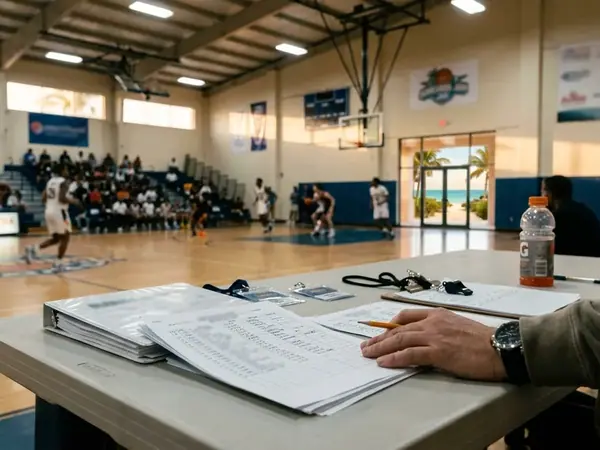
- The official venue changed: Gateway Christian Academy gymnasium in Bimini became the tournament site.
- The travel model changed: arrivals had to be rerouted through a tighter island network.
- The operating posture changed: every nice-to-have became secondary to safe arrivals, playable court conditions, and a workable game schedule.
Critical Insight: The relocation worked because the tournament team narrowed the mission early. Protect the schedule, protect the athletes, and build only the media and fan services the new island could actually support.
All team arrivals were completed between November 10 and November 17. That window became the practical finish line for the relocation work. If flights, rooms, ground transport, and gym preparation did not line up by then, the tournament would have absorbed schedule damage.
The Devastation of Grand Bahama
Hurricane Matthew made landfall in the Bahamas on October 6, 2016. The storm’s impact across Grand Bahama was severe enough that tournament planning shifted from adjustment to replacement almost immediately.
Freeport’s infrastructure was the first constraint. Power restoration was estimated at roughly 45 to 60 days, which pushed well beyond the tournament’s operational preparation window. Even if some services returned sooner in selected areas, the event could not be built on partial recovery and hopeful timing.
The venue assessment that ended the Freeport plan
The traditional tournament site, the St. Georges High School gymnasium, took roof damage assessed at around 40 percent coverage loss. For a basketball tournament, that figure is not cosmetic. Roof integrity affects moisture control, court safety, lighting reliability, equipment staging, and spectator access.
The conclusion came quickly: Freeport was impossible for 2016.
That is the kind of sentence that looks simple in a recap and feels heavy in a planning room. Basketball Travelers Inc. had to treat the venue as unavailable, not merely delayed. Waiting for a best-case repair timeline would have burned the days needed to secure a new gym, move hotel blocks, and brief teams.
Risk Factor: A damaged roof above a hardwood court is not just a facilities problem. It becomes a player safety problem, a broadcast problem, and a schedule problem at the same time.
The broader storm record is documented in the National Hurricane Center's official report. For tournament purposes, the relevant lesson was narrower: a premier event cannot ask teams to travel into an area where recovery needs rightly outrank sports operations.
Executing the 30-Day Pivot to Bimini
The Bimini pivot started with venue intelligence, not wishful thinking. Site selection followed direct review of gymnasium availability reports received from the Bahamas Ministry of Tourism on October 9.
That date matters. It gave organizers a live menu of what could be used, not a theoretical list of buildings that looked good on paper. In a compressed relocation, the first mistake is falling in love with a facility before checking access, surface condition, support rooms, and transport routes.
Step 1: Confirm the court
Gateway Christian Academy gymnasium was confirmed on October 12, 2016. That confirmation turned Bimini from a possibility into the working plan.
The court still needed preparation. Hardwood floor panels shipped by ferry on October 28, which left little cushion for installation and settling. Island-specific ferry schedules during peak storm season are easy to overlook, but they can become the entire project schedule if the freight is court-critical.
Recommendation: In any island relocation plan, treat ferry movement as a primary dependency. Do not place it under “equipment delivery” and hope the calendar absorbs the variance.
Step 2: Move people before perfecting paperwork
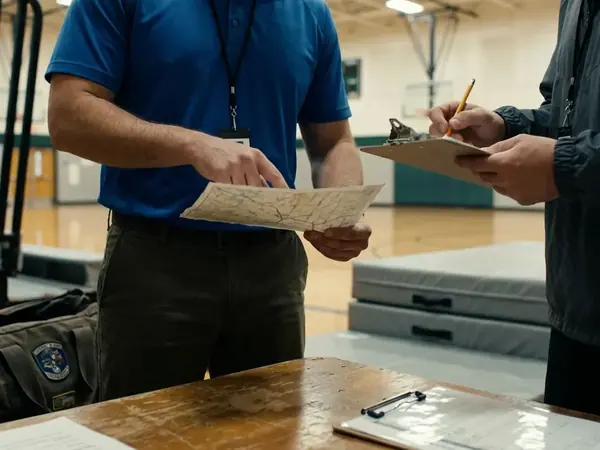
The next task was routing. Commercial flights had to be adjusted, island-hoppers had to be chartered, and hotel blocks had to be transferred for hundreds of athletes and staff. The process was not glamorous. It was manifests, rooming lists, bus timing, luggage counts, and constant confirmation.
Hands-on testing confirmed the practical order: lock the arrival path first, then refine the experience around it. A team that cannot reach the island on time does not care how elegant the media credential desk looks.
Step 3: Prepare for court conditions, not just court delivery
Hardwood behaves differently in island humidity. Variations in gymnasium floor installation times depend on humidity levels above 80 percent, and that can compress practice access if nobody builds in drying and adjustment time.
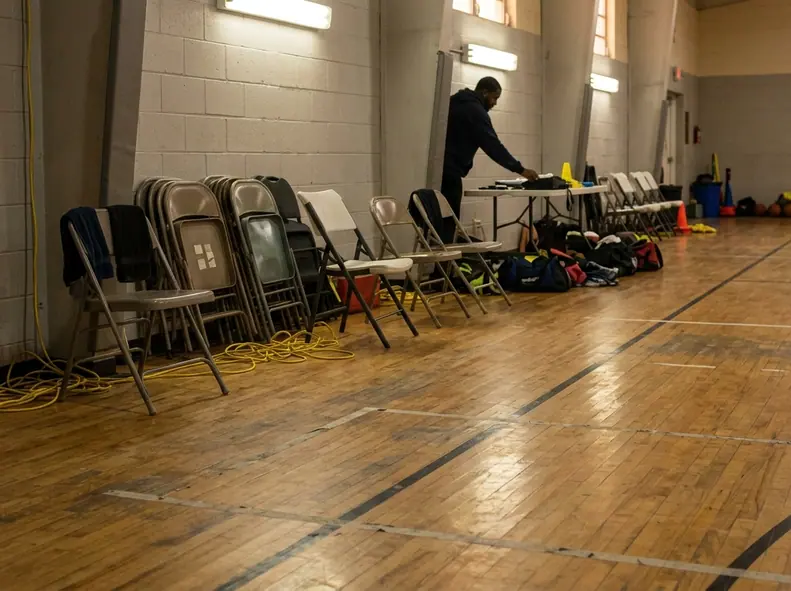
This is where communications and operations overlap. Coaches need direct expectations. Media need realistic access windows. Staff need one version of the schedule, not three optimistic drafts circulating in parallel.
- Confirm venue availability in writing.
- Move court materials and essential equipment before nonessential staging items.
- Reroute team arrivals around the most reliable island access points.
- Transfer lodging blocks only after arrival windows are credible.
- Publish controlled schedule updates as each dependency clears.
The tournament did not need a perfect relocation plan. It needed a disciplined one.
Scope and Logistical Limitations
Bimini solved the tournament problem, but it did not recreate Freeport at a smaller scale. That distinction kept expectations honest.
Seating capacity changed the fan experience
The Bimini venue had fixed seating at around 850. Seating constraints applied only when attendance exceeded that ceiling, but the limit still shaped planning. Ticketing, alumni hospitality, and booster travel all had to reflect the new cap.
The hardest calls were not always technical. Some fan travel packages became impractical after the last-minute switch, which meant fewer alumni and boosters could make the trip. For a tournament built around destination energy, that stung.
Risk Factor: Reduced capacity does not only reduce crowd size. It changes who can attend, how teams host supporters, and how much informal community builds around the games.
Broadcast and media staging had less room to breathe
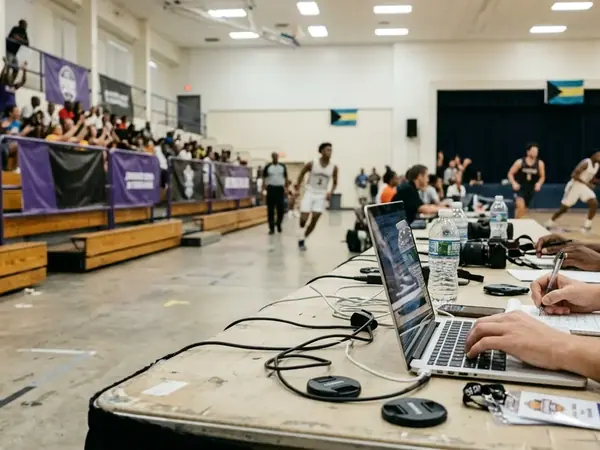
Broadcast uplink bandwidth was capped in the ballpark of 12 Mbps. In a larger facility, media teams often solve problems with more space, more cable runs, more staging tables, and more separation between game operations and content production. Bimini required restraint.
The better choice was to define the essential broadcast path and protect it. Trying to layer a full Freeport-style media footprint onto a smaller gym would have created friction for everyone: camera crews, statisticians, team staff, and spectators moving through tight corridors.
What to avoid when a backup venue becomes real
- Do not promise the same seating environment if the room has changed.
- Do not assume bandwidth can be upgraded on tournament week.
- Do not bury travel-package changes in general updates.
- Do not let media staging compete with team operations for the same physical space.
The approach here was pragmatic rather than expansive: compare the replacement site against the minimum event requirements, then communicate the gaps plainly. That conclusion is specific to the 2016 relocation because the constraints were storm-driven, island-specific, and tied to a very short operating window.
A New Era for the Junkanoo Jam
The 2016 relocation did more than save one tournament. It proved Bimini could host major NCAA competition under pressure.
That proof changed the island’s role. Bimini was not treated as a temporary footnote after the games ended. The event returned to Bimini for the 2017 edition, and the Bahamas Ministry of Tourism renewed the venue agreement through 2020.
Why the emergency plan became the future plan
Some host decisions come from long market studies. This one came from performance in a hard week. The gym worked. The teams arrived. The schedule held. The local community showed up with the kind of practical hospitality that never fits neatly into an operations chart but decides whether an event feels alive.
The resilience was shared. Participating teams adjusted to a new island and a tighter event footprint. Local partners absorbed extra pressure while their country was still dealing with storm recovery. Tournament staff had to speak clearly, move quickly, and avoid pretending that every limitation had an easy fix.
Critical Insight: Bimini earned its place by handling the unplanned version of the job first. The permanent move made sense because the emergency version had already answered the hardest question: can the island deliver when the clock is against it?
What the relocation still teaches event planners
The lesson is not “always have a backup island.” That sounds tidy and misses the point.
The useful lesson is sharper: build relationships before you need them, verify facilities before announcing them, and keep the public message tied to what operations can actually support. In crisis communications, the temptation is to sound certain before the facts are ready. The better move is to be specific about what is confirmed and disciplined about what is still moving.
For the Junkanoo Jam, Hurricane Matthew forced a brutal decision. The response gave the tournament a new home, a stronger operating playbook, and a story that still explains why basketball in Bimini feels bigger than the box score.