Contents
- Essential Transit Takeaways for Tournament Week
- Reaching the Island: Flights and Ferry Services
- Navigating North Bimini: Golf Carts and Taxis
- Official Event Shuttles and Venue Access
- Scope and Limitations: Weather and Inventory Constraints
Essential Transit Takeaways for Tournament Week
Bimini rewards the fan who plans early and punishes the fan who assumes island transit works like a mainland rideshare market.
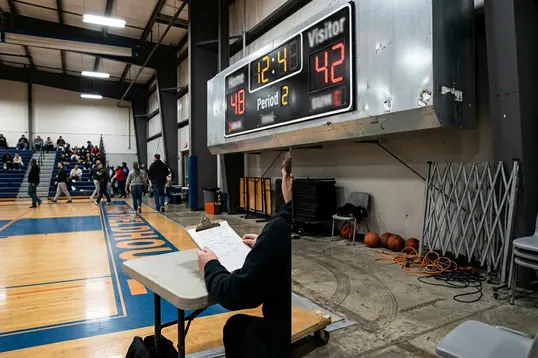
That is the first principle I use when building basketball travel plans for tournament week. The island is compact, the game schedule is concentrated, and the same limited vehicles serve teams, media, VIP guests, hotel staff, restaurant runs, and regular island movement. Once the first traveling party arrives, the system becomes less flexible by the hour.
Book the local legs before you book your dinner plans
The planning threshold is simple: pre-book all island transportation at least 30 days before the first tip-off. A two-week booking window may sound reasonable in a generic travel checklist, but it fails against the actual tournament-week requirement in Bimini. By then, the practical inventory is already spoken for.
- Reserve golf carts before arrival, not at the dock.
- Confirm how your group gets from the ferry dock or airport water taxi landing to lodging.
- Check whether your ticket package includes shuttle access or only game admission.
- Keep arrival day light; do not stack tight dinner, check-in, and tip-off plans.
The three movements that matter
Tournament attendees usually move through three distinct systems. First, they reach Bimini by air or ferry. Second, they transfer into North Bimini. Third, they move between lodging, restaurants, and Gateway Christian Academy for games.
Each system has its own constraint. Flights into South Bimini still require a water taxi to North Bimini. Ferry passengers arrive closer to the local traffic pattern but still need ground transportation. Game-day access adds another layer because venue drop-off rules are enforced near the academy entrance.
For this guide, I treat schedules as planning inputs rather than promises, because maritime conditions and vehicle inventory are the variables that most often change the day on the ground.
Reaching the Island: Flights and Ferry Services
There are two practical entry routes for college basketball attendees: fly into South Bimini Airport or take the Balearia Caribbean fast ferry from Fort Lauderdale. Both routes work. They just create different timing risks.
Flying into South Bimini Airport
Commercial flights land at South Bimini Airport, listed as BIM. From there, attendees still need the short water taxi leg to North Bimini. That crossing typically completes in 10 to 15 minutes, but the time on the water is not the only planning detail. You also need to account for bags, party size, the sequence of arrivals, and whether someone in your group needs extra assistance boarding or disembarking.
This is where first-time visitors sometimes misread the map. The airport arrival does not place you at the gym, your hotel lobby, or the main North Bimini restaurant strip. It places you at the start of the next transfer.
Taking the ferry from Fort Lauderdale
The Balearia Caribbean fast ferry provides a direct scheduled crossing from Fort Lauderdale to Bimini. The scheduled crossing time is around two hours, which makes it attractive for fans who prefer not to connect through air service or who are already in South Florida.
The ferry route has a clear rhythm: arrive at the terminal, board, cross, clear the arrival process, then secure local transportation. It feels simple when the water is calm and the group is organized. It becomes less simple when a party splits its bags, forgets document steps, or assumes a cart will be waiting without a reservation.
Documents before departure
Verify passport validity before leaving for Bimini. Complete the Bahamas Customs and Immigration digital forms before departure, not while your group is standing in a line with weak patience and a game time approaching. For current entry guidance, use the official Bahamas travel and entry protocols.
That advice sounds basic because it is. In sports travel, basic failures create expensive delays.
Navigating North Bimini: Golf Carts and Taxis
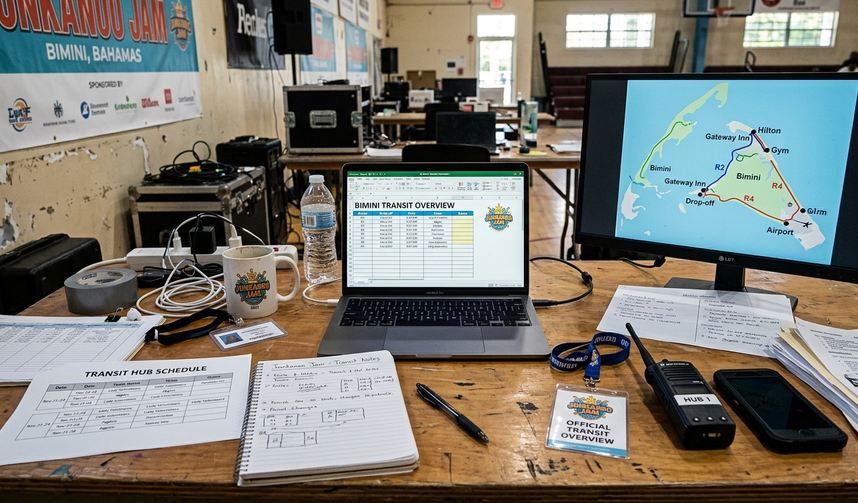
North Bimini is where the tournament week routine takes shape. Gateway Christian Academy sits directly on Kings Highway, and that single fact should frame how you think about movement. You are not navigating a large city grid. You are navigating a concentrated island corridor during a peak event period.
Why golf carts dominate local movement
Golf carts are the primary mode of local transit in Bimini because they fit the island’s scale. They let fans move between hotels, restaurants, the ferry area, and the gymnasium without waiting on a fixed loop. For small groups, that flexibility is often the difference between a relaxed pregame meal and a rushed arrival.
But flexibility exists only if the cart is reserved. Golf cart fleet size is capped by island operators during peak weeks, and tournament demand fills the available pool quickly. Walk-up rentals are rarely available during tournament week.
- Choose the cart size based on the number of people who will actually ride together.
- Reserve at least 30 days before tip-off.
- Confirm pickup location and return instructions before arriving on the island.
- Keep your game schedule handy when planning restaurant stops and return timing.
Where taxis fit best
Licensed local taxi vans are available at the ferry dock and major hotels. They are regulated under Bahamas Road Traffic Department licensing at the ferry dock, which matters because tournament visitors should not rely on informal offers when moving as a group with luggage or time-sensitive game plans.
Taxis work best for defined transfers: ferry dock to hotel, hotel to a scheduled dinner, or a short movement when a cart is not practical. They are less precise as a substitute for having all-day mobility, especially if several games and meals are spread across the day.
My operating rule for fan groups
In our group planning, I prefer to assign one transportation captain before anyone lands in Bimini. That person keeps the reservation details, confirms who rides where, and knows which guests have shuttle eligibility. It reduces dockside debate, which is the least productive kind of meeting.
Official Event Shuttles and Venue Access
Official tournament shuttles are useful, but they are not public island transportation. That distinction prevents most of the confusion I see around venue access.
Who can use the shuttles
Complimentary shuttle services run exclusively for credentialed media, team personnel, and VIP package holders. Those categories are not interchangeable. A game ticket does not become a media credential. A hotel confirmation does not become VIP shuttle access. A team guest arrangement does not automatically transfer to another fan in the same travel party.
Shuttle eligibility rules differ sharply by credential category, so confirm your status before building the day around that service. If your access depends on a badge, wristband, package confirmation, or staff instruction, keep that item available.
How the loop operates
Shuttles operate on a continuous loop beginning two hours before the first scheduled game of the day. The loop connects major resorts and Gateway Christian Academy. That timing is designed around game flow, not beach plans, off-site meals, or last-minute errands.
The cleanest way to use the shuttle is to travel early, especially for the first game window. Waiting until the final pregame wave compresses everyone’s patience into the same short interval.
- Check the first scheduled tip-off time for the day.
- Work backward from the two-hour shuttle start.
- Arrive at the pickup point before the group you think you need to beat.
- Keep credentials visible and ready.
Venue drop-off discipline
Drop-off zones are strictly enforced at the Gateway Christian Academy entrance to manage traffic flow. This is not ceremonial control. A small venue approach can jam quickly when carts, vans, pedestrians, and credentialed arrivals converge near tip-off.
Ask your driver where pickup will happen after the game before you exit the vehicle. The postgame crowd feels different from the pregame crowd: more people leave at once, conversations spill outside, and groups discover they did not agree on a meeting point. Solve that before the final buzzer.
Scope and Limitations: Weather and Inventory Constraints
Bimini transit planning has two hard constraints: weather and inventory. Neither responds to enthusiasm.
Weather changes the maritime plan
Ferry services and water taxis are subject to sudden cancellation due to high winds or adverse maritime conditions. Services cancel when sustained winds exceed 25 knots. That limit is not a preference; it is an operating boundary.
This affects both arrival and inter-island movement. A traveler who flies into South Bimini still depends on the water taxi to reach North Bimini. A ferry passenger depends on maritime conditions for the primary crossing from Fort Lauderdale. When the water leg stops, the rest of the itinerary waits.
Inventory is fixed before demand peaks
Golf cart inventory on the island is strictly limited, and tournament week is not the time to test whether an operator has one more cart in the back. Advance reservation is the practical standard. Walk-up availability should not be part of the plan.
The same mindset applies to local transfers. A licensed taxi van at the dock is helpful, but it is not a guaranteed solution for every group at every moment. The more people in your party, the less you should rely on improvisation.
What to do when plans shift
Start with the non-negotiables: arrival day, first game you intend to attend, lodging check-in, and any credentialed responsibilities. Then identify which transit leg has the highest chance of disruption. For ferry travelers, that is the crossing. For flight travelers, it may be the water taxi connection to North Bimini. For fans staying farther from their usual meal spots, it may be local vehicle access after games.
When one leg moves, do not rebuild the entire trip from memory. Use the original plan as the base, then adjust the affected segment. That approach sounds formal, but it keeps a travel group calm when the island is busy and every other fan is trying to solve the same problem.
- Arrive 24 hours before the game window you care about most.
- Reserve golf carts 30 days ahead, not two weeks ahead.
- Confirm shuttle eligibility by credential category.
- Keep document, ferry, flight, cart, and lodging confirmations accessible offline.
- Know the route to Gateway Christian Academy on Kings Highway before game day.
The best Bimini basketball trip feels easy because the transportation work happened early. Once you are on the island, the goal is simple: get to the gym, enjoy the hoops, and leave enough space in the schedule to remember you are in the Bahamas.