Count Recovery From the Final Horn
Tipoff spacing means the elapsed time from the final buzzer of an opening-round game to the scheduled tipoff of the next day's matchup. That is the recovery window a team actually receives. Counting from opening tip to opening tip hides the time spent playing.
The verdict is straightforward: in multi-day destination brackets such as the Junkanoo Jam, unequal recovery windows create a competitive imbalance before the next game begins. The bracket can give opponents the same next-day start while handing them very different nights.
I start a schedule review by walking backward from the next tip: warmup, transport, preparation, breakfast, sleep, treatment, dinner. That exercise makes the overnight squeeze visible.
Walk a Sample Bimini Card Forward
Consider a hypothetical opening day with games at 4:00 p.m. and 8:30 p.m. If their final horns sound at 6:05 p.m. and 10:35 p.m., a shared noon return gives the early team 17 hours 55 minutes between games. The late team gets 13 hours 25 minutes. The difference is four and a half hours.
Those are worked schedule assumptions, not a report of a particular Junkanoo Jam edition. They expose the question every set of brackets & schedules should answer: how much usable recovery does each possible opponent receive?
Three demands compete for that clock: athletic recovery, mainland broadcast windows, and venue changeover in the Bahamas. Good scheduling puts all three on the same planning sheet before start times become public commitments.
The Late Opener Carries Work Past Midnight
The traditional Junkanoo Jam arrangement of separate four-team divisions puts a second game immediately behind the opener. Conference play more often leaves intervening days for treatment, practice, travel, and sleep. An overnight tournament turnaround compresses those jobs into a narrow stretch.
Now follow the late team through that hypothetical 8:30 p.m. opener. The horn sounds near 10:35 p.m. Players still have several stops before their rooms.
Follow the Team Beyond the Court
- Finish media duties. Interviews require players to remain available while communications staff coordinate access and wrap the postgame obligations.
- Complete individual treatment. Athletic trainers assess soreness and address player-specific needs. Some players move through quickly; others need longer attention.
- Return to the resort rooms. A walk or shuttle still consumes time, even when the court and accommodation share a property.
- Eat, shower, and settle. A meal beginning after 11:15 p.m. pushes the evening routine toward midnight and beyond.
That last time belongs to the same worked example. Its practical lesson is the sequence: the team cannot spend the entire horn-to-tip interval asleep.
A noon return then pulls breakfast, taping, scouting, transport, and warmup into the morning. Sleep gets squeezed from both ends. An unfamiliar room and the stimulation of a close game can make settling down harder, too.
Move Logistics, Protect Treatment
The useful intervention happens before the opener. Arrange meal service around the team's return, confirm the transport departure point, and coordinate a compact media sequence. Players needing treatment should have a clear route to the training staff.
Skipping recovery work to reach bed earlier merely shifts the problem. Remove avoidable waiting instead. For tournament communications, that means knowing which players are requested and where interviews will happen before the final horn.
Short Nights Reach the Fourth Quarter
Recovery has several jobs. Food helps replenish glycogen used during play. Fluids support rehydration. Rest gives players time to recover from repeated accelerations, jumps, contact, and changes of direction. A late finish crowds those jobs together.
In the Bahamas, warm coastal conditions also belong in the plan. Travel between buildings and time outdoors add heat exposure around the basketball schedule. Keep drinks accessible through treatment, meals, and the morning routine rather than treating hydration as a warmup task.
Watch the Legs and the Decisions
Neuromuscular fatigue can affect the force and coordination needed for shooting, closeouts, and recovery runs. A perimeter player may struggle to reproduce the same lift late in the second game. A defender arriving late has less time to establish position and more temptation to reach.
These are useful observation points for the fourth quarter: shot balance, defensive transition speed, closeout control, and foul discipline. Coaching staff can monitor them alongside minutes played and individual treatment needs when deciding substitutions.
The tactical squeeze begins earlier. A full morning shootaround adds another physical demand and takes time from sleep and breakfast. A brief film session can deliver the essential opponent cues while keeping players off their feet.
Give the Shortened Session a Job
- Identify the opponent's main actions and the preferred defensive coverage.
- Clarify transition assignments and matchup responsibilities.
- Review late-game situations without turning the meeting into an exhaustive scouting presentation.
- Plan rotation options before fatigue forces an improvised decision.
For broader health context, keep the NCAA student-athlete health and safety guidelines on rest and recovery within reach during planning. Event-specific recovery decisions belong in the working conversation between basketball operations, coaches, and athletic training staff.
Mainland Screens and Island Breaks Share the Clock
An evening game in Bimini offers an attractive mainland viewing window. In late November, Bimini aligns with U.S. Eastern time. The hypothetical 8:30 p.m. local opener therefore reaches Pacific viewers at 5:30 p.m.; a 2:00 p.m. local game reaches them at 11:00 a.m.
That difference matters when organizers place news & webcasts around audiences following their teams from home. It also explains why simply moving every game earlier creates another scheduling problem.
Travelling supporters bring a different preference. Alumni groups want time to eat together, enjoy the beach, and use the resort between sessions. Travel & destination planning works better when fans can leave the gym without missing their team's next appearance.
Budget the Empty-Court Time
A single-court venue needs working space between games. Crews sweep the floor, teams warm up, officials rotate, and ticketing staff clear or admit spectators where sessions require it. A published gap must accommodate those tasks.
Start with the actual venue sequence. Ask who controls each handoff and what happens when the preceding game runs long. Compressing the changeover on paper can push the next tip later and quietly consume the following night's recovery buffer.
The same logic applies when comparing Bimini and Freeport tournament details across tournament history: check the venue arrangement rather than assuming every island edition uses identical operations.
A later championship can provide a longer overnight window for both finalists. It still preserves the difference created by their previous finishing times. Broadcast convenience and recovery parity need separate checks.
Put Recovery Floors Into the Event Agreement
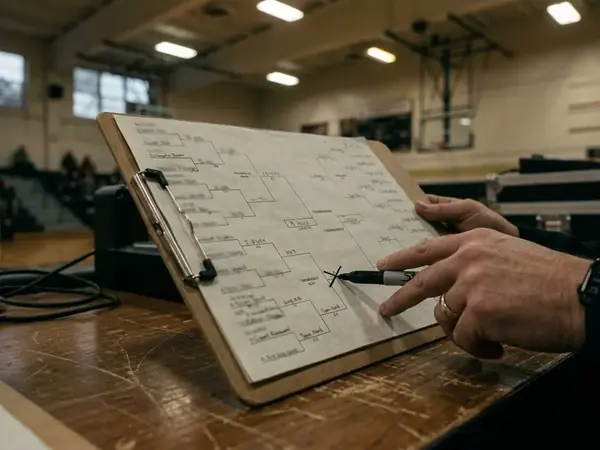
Build the bracket around possible opponents before selling individual time slots. Place teams that could meet the following day in opening slots close enough to produce comparable recovery windows. Review the consolation route with the same care as the championship route.
Set a Floor and a Parity Check
A practical negotiating proposal is a minimum of 16 hours from final horn to next tip, rising to 18 hours when the opening game finishes after 10:00 p.m. Treat these as proposed contract terms, rather than NCAA requirements.
This framework fits a single-court island event with resort-property housing; teams using a different transport arrangement should rebuild the overnight timeline before adopting the buffer.
Under the proposed late-finish rule, the hypothetical 10:35 p.m. horn pushes the next tip to 4:35 p.m. That consequence belongs in negotiations while organizers can still adjust broadcast and session plans.
Meeting a minimum is only part of the job. Compare both opponents' windows. Flag bracket halves whose opening tips sit more than four hours apart, and use a proposed 90-minute finishing-time band when testing comparable rest. Put consolation before championship only when both matchup routes pass that check.
Review Before Signing, Then Test Again
- During contract redlines: define recovery from the actual final horn, include the agreed minimum, and specify who can move the next tip after a delay.
- Before accepting the bracket: trace every team's win and loss routes. Record the shortest possible turnaround for each.
- When the final tip sheet circulates: confirm meal service, training access, transport, media duties, and court changeover against the published times.
- Before travel: distribute the delay procedure so coaches, broadcasters, venue staff, and communications personnel work from the same decision.
If your team draws the late opener, will you accept an early return or require the recovery buffer in writing before signing?